KYRA
Welcome to The Eclipse, a community within Kyra Nesaire. The Eclipse is a gathering place for hearts and homes. Within this community, we embrace the beautiful journey of homemaking in all its facets. Join fellow Moonies/MoonWalkers as we navigate the joys and challenges of marriage, the adventure of parenting, the intentionality of homeschooling, and the ever-evolving path of personal and spiritual wellness. Find inspiration, connection, and practical wisdom to illuminate your own unique home.

Spiritual

Marriage

Parenting

Hearth
Personal
Beyond Footnotes: The Empress Inheritance
I was maybe six or eight years old when my father told me something that would become the cornerstone of the woman I am today.
He’s absent now, and the pedestals I once built for him have long since crumbled—but the truth doesn’t care who the messenger is.
He told me:
“You don’t always have to explain yourself. If you’re right—even if the whole world is against you—if you know you’re right, you stand in that.”
At eight, I felt the power of those words before I had the life experience to use them.
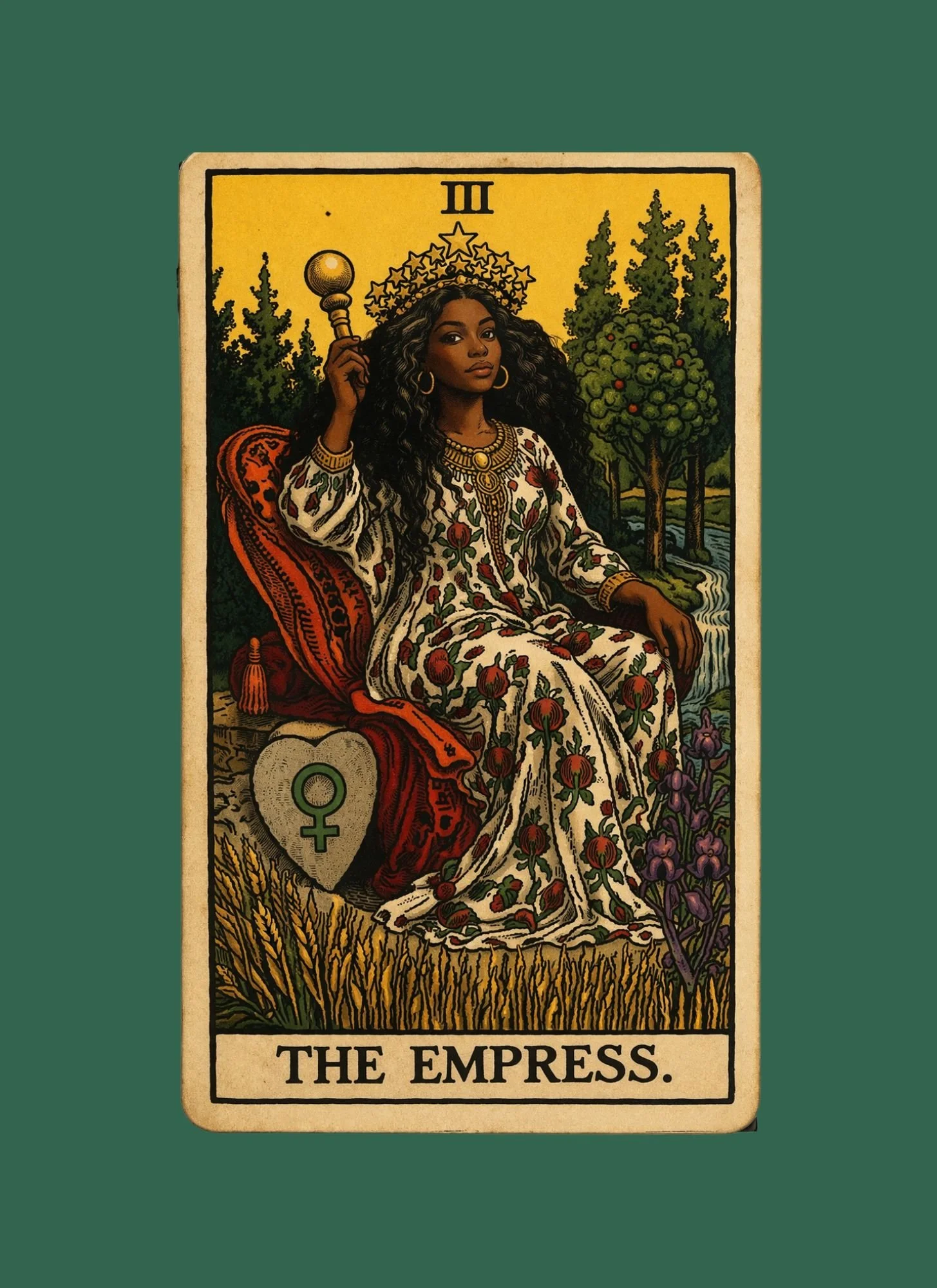
Now, wearing the shoes of the Empress, I realize he wasn’t just giving me advice—he was handing me my first lesson in sovereignty.
My truth is not a negotiation.
And I no longer exhaust myself trying to make it digestible for people who have already decided how they see me.
There is a quiet, almost violent power in letting someone be wrong about you—and not correcting them.
The Part Where Most People Turn Back
I used to be a professional translator for my own soul.
If I set a boundary, I followed it with a paragraph. If I changed my mind, I provided a map of my reasoning. If I chose myself, I spent the next three days making sure everyone else still felt "okay" with my fire. I thought I was being kind. I thought I was being "clear."
But the truth I had to swallow is this: Explaining is just a sophisticated form of self-abandonment.
The Inheritance
I was maybe six or eight years old when my father told me something that would become the cornerstone of the woman I am today. He’s absent now, and the pedestals I once built for him have long since crumbled, but the truth doesn't care who the messenger is.
He told me: "You don’t always have to explain yourself. If you’re right about something—even if the whole world is against you—if you know you’re right, you stand in that."
At eight, I felt the power of those words before I had the life experience to use them. Now, wearing the shoes of the Empress, I realize he wasn't just giving me advice; he was giving me my first lesson in sovereignty. He was teaching me that my truth is not a negotiation.
The Safety in the Noise
For a long time, I ignored him. I used the "explanation" as my shield. I thought if I could just make you understand me, you wouldn't be angry. I was softening my edges so I wouldn't cut anyone, but in the process, I was dulling my own blade. I was adjusting and over-justifying because I didn't trust my own "Yes" to stand on its own two feet.
Then, the Day 3 shift happened. I realized that the people who require constant explanations aren’t actually committed to understanding me—they’re committed to their version of me. They don't want clarity; they want a way to pull me back into a room that is three sizes too small.
Letting Them Be Wrong
So, I just… stopped.
I stopped providing the footnotes to my existence. And yes, the air gets thin up here. People project. They assume the silence is "attitude." They decide your quiet is "arrogance." They get agitated because they can no longer find a handle to pull you back into their comfort zone.
And I let them. Part of becoming Her—the Empress, the woman who moves on the red earth with no permission—is learning to sit in the heat of being misunderstood without trying to fan the flames. There is a terrifying, ancient power in letting someone be wrong about you. When you stop trying to manage their perception, you finally have your hands free to build your own kingdom.
The Sovereign Move
This is what it’s like to wear these shoes. I don’t move like someone who is asking for a vote. I move like a woman who remembers what her father said, even if she doesn't remember his face.
I don’t need to be "understood" to be right for myself. My decision is the period at the end of the sentence. No footnotes. No "buts." Just the movement.
I trust my decision. That’s enough.
The Threshold:
Where are you still over-explaining? Where are you still providing a map to people who don't even want to follow you?
Stop the footnote. Let them be wrong about you.
Drop a "⚡️" in the comments if you’re done asking for permission to move.

The Discipline of Staying With Yourself
You don’t need something to fall apart to know it isn’t right.
There’s a quiet exhaustion that comes from living a life that still “works”… but no longer feels true. This is what it costs to stop keeping the peace with something that’s already over.
The High Cost of Keeping the Peace
We’ve been taught that spiritual wellness looks like a clean slate and a calm mind. But true spiritual health isn't the absence of noise; it’s the refusal to lie to yourself about what the noise is telling you.
The Luxury of Denial
There is a specific kind of exhaustion that comes from pretending a "fine" life is a "full" life. You spend your days smoothing over the cracks in the floorboards, hoping no one notices that the foundation is shifting.
"Spiritual bankruptcy doesn't happen in a landslide. It happens in the quiet moments where you choose a comfortable lie over an inconvenient truth."
The Lonely Road to Freedom
The part they don't tell you about choosing your soul over your comfort is the silence that follows. I am walking a road that feels increasingly narrow. I have lost relationships I thought were permanent. I have watched seats at my table go empty because I stopped providing the "comfort" everyone else was used to.
It is a staggering price to pay. But I’ve realized that freedom doesn't always look like a celebration; sometimes, it’s just the ability to breathe in a room alone without feeling like you had to betray yourself to stay there.
How I Anchor Myself in the Quiet
When the solitude feels less like "freedom" and more like "loneliness," I practice the art of staying put:
• The Exit from the Cycle of Explanation: I used to spend every other week defending my heart or accidentally offending someone just by being honest. I hate confrontation, and the constant need to explain myself was a slow leak in my spirit. Now, the silence isn't empty—it’s peaceful.
• Practicing the Art of Letting Go: Following Dr. David Hawkins’ teachings, I’ve learned to sit with the emotion instead of running from it. I don’t suppress the loneliness; I let it burn through.
• Shifting to the Observer: I remind myself that I am not the one "suffering" through this; I am the Spirit observing it. When I step back into the seat of the Observer, the loneliness loses its teeth.
• Connecting to the Earth: I get back into my body. I touch the ground, I look at the life around me, and I count the reasons I have to be grateful. The "good side" of walking away is that there are no more fake people at my table. My space is finally clean.
The Promise of the Village
Please understand: I am not saying life is meant to be a solitary sentence. I am not suggesting you cut the world off just to prove you can.
What I am saying is that when you set yourself free—when you truly learn to love the woman you are in the dark—you stop shrinking to fit into rooms where you were never meant to stand. You stop compromising your light just to keep others from squinting.
Learning to be alone is the training ground. It keeps you strong enough and your light bright enough so that the right people—your actual village—can finally find you. You have to be visible to be found. And you can’t be visible if you’re hiding behind a version of yourself that doesn't exist.
Let’s Talk in the Quiet:
I want to know where you are in your own journey of "becoming":
1. What is one 'comfortable' thing you are currently holding onto that feels like it’s starting to rot?
2. How do you handle the silence when you finally stop explaining yourself to people who aren't committed to understanding you?
Drop a "🕯️" in the comments if you’re currently walking the lonely road. You aren’t as alone as you feel.
There’s a certain kind of clarity that changes everything… but doesn’t tell you what to do next. It just makes it impossible to keep pretending you don’t see it.
If you’re in that space right now—where something has shifted and you can’t quite find your footing again—this is exactly the work I’m stepping into more deeply this month.
I’ll be opening a few reading spots soon. If you want to be notified when they go live, you can join my email list here → Join the list
Until then… just stay with what you’re noticing.
The Architecture of the Unspoken: When the Moon is Your Only Witness
We’ve been trained to wait for our eyes to confirm what our bones already know.
We treat the sudden chill in a room like a glitch instead of a warning—convinced that if we can’t explain it, it isn’t real.
So we stay.
We stand in situations already hollow, ignoring the way the air shifts, the way something in us goes quiet. We wait for a “sign” that looks like proof, while the truth has already settled in the body.
The cycle is exhausting: you feel it, question it, wait for evidence—
and by the time it arrives, you’re standing in the wreckage of something you knew from the beginning.
Intuition isn’t something you validate.
It’s something you feel before you understand.
The world is obsessed with the Sun. It wants everything bleached in high-noon certainty, categorized, and filed away under "Logical." But for the Deep Woman, the Sun is often a liar. It’s too loud. It hides the subtle vibrations, the silver threads of energy, and the quiet shifts in the room that tell the real story.
Most of what guides your life shows up before it ever makes sense. If you are waiting for a thunderclap of certainty, you’ve already missed the transmission.
The Moon Card: Night Vision for the Soul
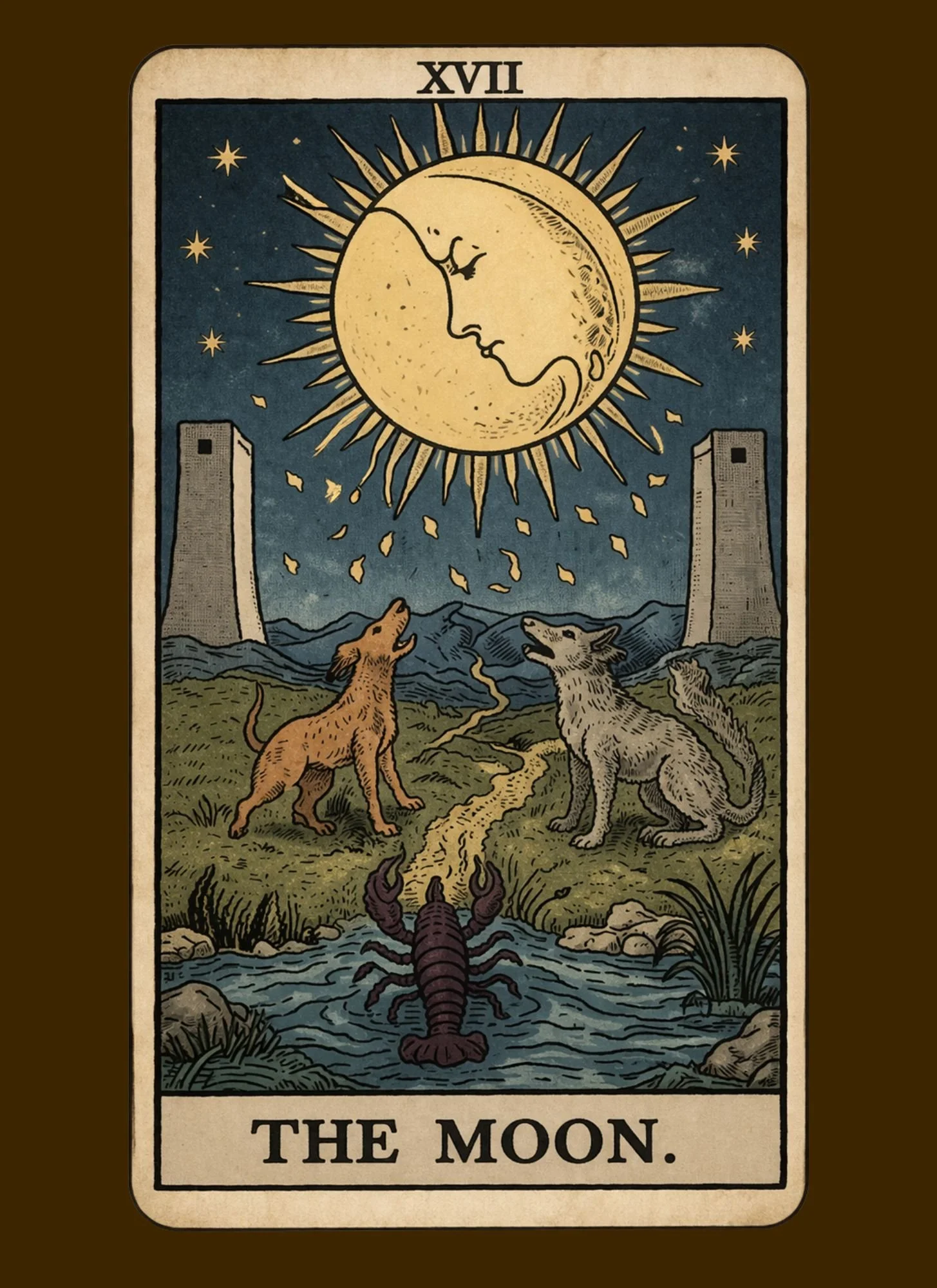
In the Tarot, The Moon is the patron saint of the "in-between." It’s the card where logic goes to die so that instinct can finally feed. Most people see The Moon and think "confusion" or "illusion."
They’re wrong. The Moon isn't a lack of clarity; it’s a different kind of clarity. It’s high-definition night vision. It’s the ability to see the wolf and the dog at the gate and know which one is yours without needing to see their collars. When you sit in the energy of The Moon, you aren't looking for a map. You are becoming the compass.
The Meat: The Anatomy of a Missed Signal
We’ve been trained to wait for the splash to settle before we believe we’ve heard anything at all. Constantly demanding "proof" before we’re allowed to believe our own eyes.
The cycle usually looks like this:
1. You feel a sudden atmospheric shift when someone enters the room.
2. You question if you’re just "tired" or "being sensitive."
3. You wait for them to say something "wrong" to justify your discomfort.
4. You ignore the shiver in your marrow because they’re smiling.
5. Three months later, you’re standing in the wreckage of a situation you knew was off on day one.
We have been gaslit into believing that if we can't explain it, it isn't valid. But your spirit doesn’t speak English; it speaks frequency.
Permission to Not Know
What you feel isn’t random just because you can’t put it in a caption yet.
That sudden pull toward a stranger, that inexplicable urge to leave a party, the heavy "no" that sits in your gut even when the "yes" looks perfect on paper—these are not "glitches." They are the fine print of the universe.
I’m not here to give you the answers to the "what ifs." I’m here to give you permission.
• Permission to not rush the clarity. (The Moon takes 28 days to cycle; why are you trying to finish your evolution in five minutes?)
• Permission to not over-explain. "The energy is off" is a complete sentence.
• Permission to stop ignoring the only person who has never lied to you: Your own instinct.
There’s a difference between feeling something… and being able to see it clearly. Not everyone has learned how to read what they feel yet.
If you’ve been sitting with something you can’t fully name, I offer intuitive readings that help you understand what your body already knows. → Join the List
The Midnight Vow
The next time you feel that subtle, silvered "knowing" and your brain starts asking for a receipt, remember: The Moon doesn't ask permission to pull the tide. It just does.
You don't need to see the whole path to know you’re on the right one. You just need to trust the shiver.
Tell me in the comments—what’s one thing you "knew" this week before you had the "proof"? Let’s normalize the unsaid.
The Little Things That Keep Us Close
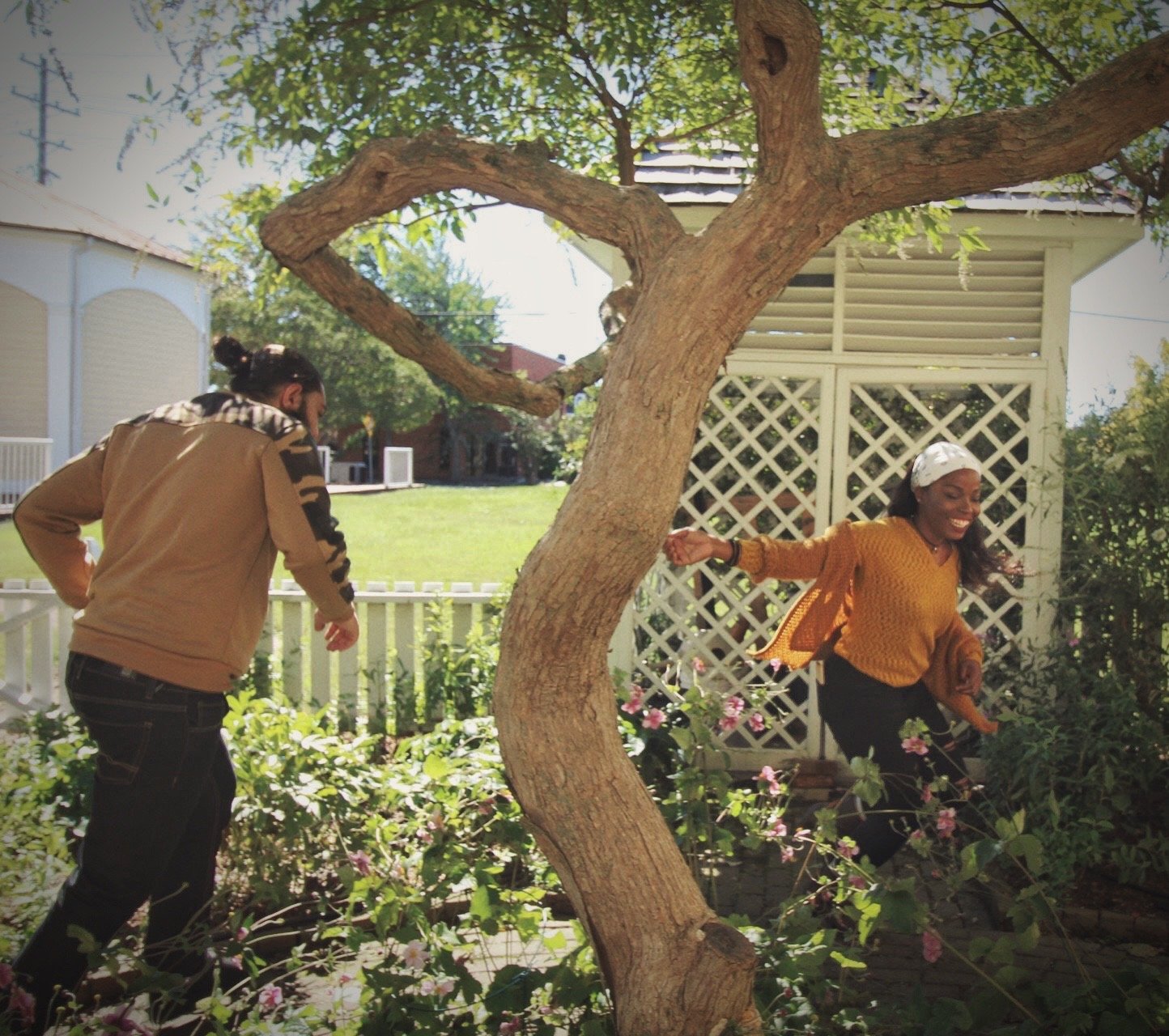
There is a sanitized, well-behaved lie we’ve been fed about what it takes to stay close. We’re told that intimacy is a ritual that requires grand altars of time—the protected hour, the candlelit table, the getaway. But when you’re sharing a single sink and your nervous system is vibrating with grief, those blocks of time feel like a cruel joke. If we believe that love only breathes in the spaces we can’t currently afford, we’ll start to view our partner as just another obstacle in the way of our peace.
We find ourselves missing each other in the hallways, not because the love is gone, but because we’re looking for it in a version of our lives that doesn’t exist right now. So, we stop waiting for the 'perfect time.' We reach for the 180-second hold, the shared wash, and the heavy copper pour. We find us in the grit, at the sink, in the middle of the wreckage.
The Architecture of Survival: Finding Us at a Single Sink
The truth is, my internal North Star has been spinning wildly for months. We didn’t just move; we uprooted. We left the familiar echoes of our own halls for a shared existence in a house that doesn’t yet know our names. We needed the ancestral shelter of our family to survive the winter of our grief. I went from having room to breathe, to sharing one small sink where I catch my own reflection and hardly recognize the woman looking back. My three-year-old is vibrating with the frantic energy of a displaced soul, and my husband spends four hours a day fighting the pavement to work.
There is a specific kind of silence that follows the death of a mother and the abrupt, jagged end of a sisterhood. It’s a numb, heavy frequency that sits in the corners of these smaller rooms. I am grieving in a space that isn’t mine, trying to architect a sense of safety while the floorboards are still shifting beneath us. This isn’t a fairytale, and I’m not interested in pretending it’s a “growth opportunity.” It is simply the raw, unconditioned grit of survival. The connection between us hasn’t vanished, but it has become a ghost–something we have to intentionally summon through the fog of exhaustion and shared air.
There is a sanitized, well-behaved lie we’ve been fed about what it takes to stay close. We’re told that intimacy is a ritual that requires grand altars of time–the protected hour, the candlelit table, the getaway. But when you’re sharing a single sink and your nervous system is vibrating with grief, those blocks of time feel like a cruel joke. If we believe that love only breathes in the spaces we can’t currently afford, we’ll start to view our partner as just another obstacle in the way of our peace. We wait for the “perfect time” to arrive, as if intimacy is something you schedule. But the ghost of that expectation quietly disconnects us. It makes us feel like we are failing at being a couple, simply because we are busy surviving a winter. We find ourselves missing each other in the hallways, not because the love is gone, but because we’re looking for it in a version of our lives that doesn’t exist right now.
The Philosophy of the Tether
In the heavy labor of building a life, it’s easy to become ghosts in the same hallway. We have learned that we cannot wait for date nights to remember who we are. Instead, we use Anchor Rituals — small, jagged pieces of intentionality that tend to the spirit of our marriage and bring it back to the center when the walls feel like they’re closing in.
If you feel called to create your own Anchor Rituals, I’ve gathered a few of the exact tools I use to support these moments of connection. → Two Souls, One Sink
The Tether Point: Sealing the Portal
When the world feels like it's ending, we meet at the mat. The Tether Point is our threshold. When he walks through the door, I take his bag and coat — a silent signal that his service to the outside world is over for the day. As the alchemist of this home, I use sacred oil on his brow and heart, saying a prayer to seal the portal against the world’s friction. This isn't about being "perfect"; it's about forcing the brain to drop the high-beta stress of the commute and enter the alpha-wave peace of home. The world stays out. The man walks in.
The 180-Second Override: The Biological Handshake
On the days when the grief is too loud to speak, we lean into The 180-Second Override. We do not talk. We do not check in. We do not allow the day's chaos to follow us through the door. For exactly three minutes, we just hold on. Science calls it an oxytocin release; I call it a biological handshake that tells my nervous system: You are safe here. It’s the quickest way to recalibrate two souls that have been vibrating at different frequencies all day.
The Sacred Wash: An Energetic Sharing
And when the day has been particularly thick with the dust of displacement, we find our sanctuary in The Sacred Wash. We enter a shared shower not as a routine, but as a deliberate shedding of every frequency that doesn’t serve us. As we wash one another, we cleanse the energetic weight of the winter. We emerge recalibrated, and entirely each other's.
Staying Close in the Fog
We are still in the hallway. The sink is still small. The grief is still sitting in the corner. But these rituals are the tethers that remind us that while we are surviving a winter, we are not doing it alone. We are building a life in the middle of the wreckage, one 180-second hold at a time.
P.S. If you’re moving through a season like this - grief, transitions, or disconnection - I will soon be opening a limited number of intuitive relationship readings.
A space to be seen clearly.
Stay close.
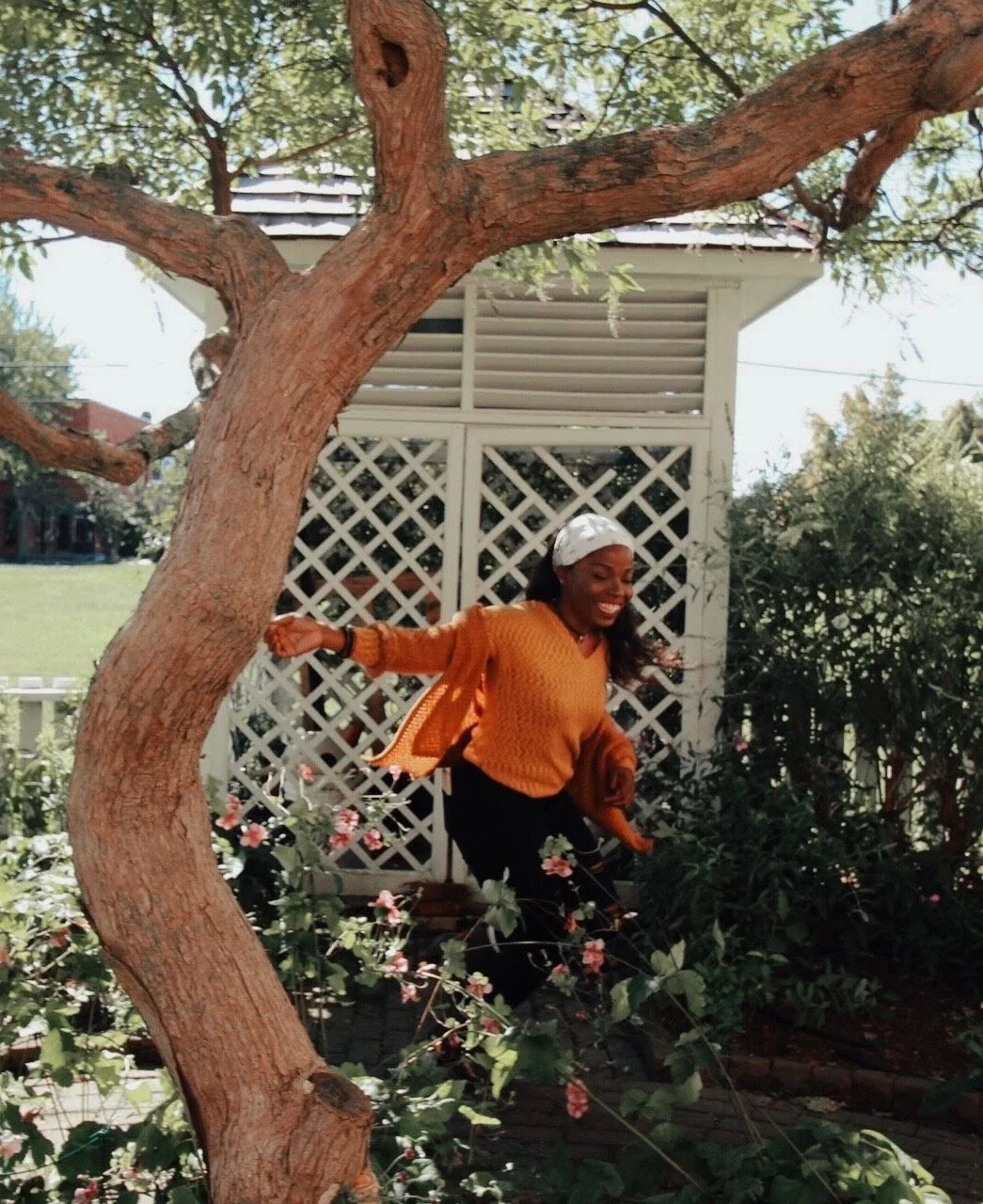
Finding My Center: The Heart of My Homemaking Journey
There is a specific kind of magic in dressing for the life you actually live. I walk my halls barefoot because I need my foundation to be pure—I am constantly grounded to it.
In the quiet of a darkened shower or the steam of a copper sink, I do my shadow work. I’m not just tidying; I’m stitching my spirit back into the fabric of my home. I’m no longer interested in a home that looks good; I want a home that feels true. Welcome to the Heart of my Homemaking Journey.
The Old Maps Led to Ruins
I used to think "homemaking" was about aesthetics. About the right linen duvet cover, the perfectly styled shelf, the curated calm of a space that whispered 'everything is fine.' It was a performance, really—an endless, exhausting quest to manifest a Pinterest board that promised control and peace. But a perfectly clean counter can’t scrub away the grief of a mother lost, nor can the most aesthetic sanctuary protect me from the raw, unconditioned truth of who I am becoming in the dark. When the world tilted on its axis, my old maps to 'home' led me straight into the ruins.
I’ve realized that I am the hearth. If my internal flame is flickering or choked by the soot of everyone else’s needs, the whole house feels cold. Finding my center isn't an indulgence; it’s the primary labor of the home. I’m learning that a sovereign woman doesn't just clean a room; she commands the frequency within it.
Rituals of Return
I’ve stopped following routines that feel like cages and started practicing rituals that feel like keys. These aren't just "to-dos"; they are the way I stitch my spirit back into the fabric of my home.
The Noon Exhale: By the time the clock strikes twelve, the house has already absorbed the frantic energy of the rising. I go from room to room and throw open the windows. I let the stale air—the echoes of the morning rush and the heavy static of the "good child" script—spill out into the street. It’s a halfway point recalibration, a way to invite the wind to sweep the corners of my mind while it clears the air in the hall.
The Cinematic Continuous: I keep a low, indie-folk hum vibrating through the walls all day. It’s never loud; it’s a soft, dreaming frequency that turns the mundane into a scene from a movie. It reminds me that I am the protagonist of this story, not just a background character in everyone else’s life. It keeps the atmosphere soft enough for my soul to remain unconditioned.
The Barefoot Benediction: I have resurrected the house dress and the soft silk of hair bows as my daily uniform—not just for my husband, but for my own sense of ceremony. There is a specific kind of magic in dressing for the life you actually live. I walk my halls barefoot, my skin in direct contact with the floors I’ve tended. This is why "clean" is a requirement, not a neurosis—I need my foundation to be pure because I am constantly grounded to it. I take this barefoot pilgrimage out into the yard, letting the clover and the soil remind me that I am part of the earth before I am a part of the world.
The Darkened Cleansing: When the children finally succumb to their nap, I don’t rush to the laundry. I close all the blinds and literally find my way through the house with a lantern. Then, I retreat to the shower, leaving the overhead lights off and letting only the flickering of candles and the soft glow of fairy lights guide me. I don’t stand under the water to wash my skin; I stand there to wash my spirit. I let the steam pull the heaviness and the "not-enoughness" out of my pores, watching the day’s negativity swirl down the drain until I am light enough to breathe again.
The Copper-Sink Confessional: I treat the dishwater like a scrying bowl. As I submerge my hands, I don’t just scrub away the grease; I scrub away the internal clutter. This is where I do my shadow work—I name the frustrations, the grief for my mother,nor can a curated corner muffle the roar of a soul that is finally learning to listen to itself without apology. I visualize the water carrying the weight of those thoughts away. By the time the rack is full, the kitchen is clean, but more importantly, my mental deck is cleared.
The Salt-Circle Sweeping: Once a week, I sprinkle a fine line of sea salt across the main thresholds of my home before I sweep. I’m not just tidying; I’m defining where the world ends and my sanctuary begins. As I sweep the salt away, I’m physically removing the "footprints" of the outside world—the expectations, the judgments, the noise—leaving only the sovereign ground I choose to stand on.
The Midnight Ink-Spells: Before I sleep, I write one sentence in my journal that has nothing to do with what I did and everything to do with how I felt. I’m recording the "verses" of my own life. It’s a witty reclamation of my story; a way to ensure that the last word of the day belongs to me, and not to the demands of the house.
The Sovereign Command
When I find my center, I stop being a victim of the mess and start being the architect of the mood. I am no longer "managing" a household; I am presiding over a sanctuary. People think homemaking is about the food on the table or the lack of dust on the mantle, but the real magic is the invisible weight of peace you feel the moment you cross the bridge of my front door.
Inhabiting the Middle
I’m still learning. Some days the center feels miles away, and the house feels like just a collection of chores and noise. But I’m no longer interested in a home that looks good; I want a home that feels true. This journey is about the slow, poetic work of becoming my own North Star. Because when the center holds, the home follows.
You may also enjoy:
• The Architecture of Belonging: Raising Unconditioned Children in the Village of Your Home
• The Architecture of a Sovereign Life
For those creating rhythms inside their home, explore the Ma & Moon Echoes of Becoming Planner.

The Architecture of Belonging: Raising Unconditioned Children in the Village of Your Home
Belonging is not something a child earns. It is the soil they grow in.
We’ve been taught to shape behavior, reward performance, and measure goodness by what can be seen. But children are not projects to perfect—they are ancient souls unfolding. When love becomes unconditional, when home becomes a place where their worth is never in question, everything else begins to organize itself.
Learning, rhythm, boundaries, confidence—all of it rises from the same foundation. The architecture of belonging isn’t built with perfection, space, or the right system. It’s built in the quiet moments of staying close during the storm, choosing connection over control, and reminding a child—again and again—you never have to earn your place here.
Because when a child knows they belong, they don’t perform for love. They become who they already are.
We’ve been sold a hollow script: that parenting is a series of strategic chess moves designed to domesticate a wild soul into a "functional" citizen. Most modern systems are obsessed with the visible—the behavior, the output, the "goodness"—while the tectonic plates of the child’s spirit go entirely untended. We focus on the fruit while the roots are screaming for water. But true belonging is not a reward for a well-acted performance. It is the soil. Belonging is the frequency of being loved without a checklist. It’s the safety of knowing your place at the hearth is permanent, not earned. We have to stop viewing our children as clay to be bullied into a shape and start seeing them as ancient seeds that simply need the space to unfurl. When the architecture of belonging is solid, the rest of the life—the learning, the boundaries, the rhythm—simply falls into its own natural orbit.
What it Means to be Unconditioned
There’s a pervasive fear that "unconditioned" means a life without gravity—a chaotic, boundary-less void. That’s the ego talking. Unconditioned doesn't mean a lack of guidance; it means a lack of debt. In an unconditioned home, love isn't a currency that gets devalued when a child hits a wall. Their worth isn't tied to their productivity, their ability to "sit still," or how well they can choke down their most inconvenient truths. Conditioning is a survival mechanism for a world that wants us small. Belonging is the medicine that reminds them who they actually are.
The Ghost of the Performance
Most of us are recovering performers. We were raised in a house of mirrors where praise was the prize for achievement and silence was the price of peace. We were taught that connection is a transaction—if you are "good," you are held; if you are "much," you are cast out. This is the heritage of the hustle, and it’s a thief. It creates hyper-vigilant souls who spend their lives scanning the horizon for approval, losing their own internal compass in the process. It turns mistakes into omens and curiosity into a liability.
The Architecture: A Cathedral for the Wild
If we treat belonging as the architecture of our existence, we build a sanctuary that protects the star-soul:
• The Foundation: Sovereignty. This is the bedrock of safety. It’s a calm nervous system that says, I see you, and I am not leaving. It’s the child knowing the earth under their feet is steady, even when their internal weather is a storm.
• The Walls: Ritual & Rhythm. These aren't cage bars; they are the banks of a river. They are the consistent, soulful edges that provide a container for growth without using the blunt force of shame to keep them in line.
• The Roof: The Unseen. This is the protection that honors their mystery. It’s a roof that lets the starlight in. It prioritizes repair over punishment and holds space for the person they are becoming, not the person society wants them to be.
When the structure is sound, children don’t need to perform to be seen. They can just exist.
The Honest Unfolding
In the grit of the daily, this isn't a Pinterest board; it’s a ritual. It’s staying tethered to them when they are vibrating with a tantrum, refusing to send them into exile to "think about it." It’s naming the shadow instead of trying to bleach it white. It’s the radical, witty act of letting them be bored, slow, and weird in a world that demands they be "on." It’s the humble work of the parent who knows how to apologize when they’ve broken the tether.
Tending Roots on Borrowed Ground
I know the weight of this. We are raising souls in a world that doesn’t value softness. We are building empires of the spirit while navigating seasons of transition, sometimes under roofs that aren't our own or in systems that feel like lead. But listen: You do not need a pristine estate to raise an unconditioned child. You don’t need a village that agrees with you. You need a consistent, unfiltered relationship. The architecture of belonging isn't made of stone; it’s made of the moments you choose to recognize the ancient soul sitting at your kitchen table.
An Invitation to the Remembering
You are not behind. You are not failing. You are a bridge between the old world of performance and the new world of presence. Belonging can be reclaimed in a single breath, in any season, at any age. Sit with this: What would happen to the atmosphere of your world if your child realized they never had to earn their way back to you?
For Parents Walking This Path
Raising unconditioned children isn’t about doing more.
It’s about seeing clearly, observing gently, and creating space for who they already are.
I created this homeschool planner to help parents track rhythms, notice patterns, and support their child’s natural way of learning.

The Architecture of a Sovereign Life
Sovereignty isn’t something you claim out loud. It’s something you build quietly. Not from control. Not from perfection.
But from the moment you stop outsourcing your safety, your worth, and your direction.
The Architecture of a Sovereign Life is built through boundaries, through self-trust, through the courage to become your own foundation.
This is not about becoming harder. It’s about becoming rooted enough that your life stands — even when everything around you shifts.
There is a specific kind of ghost that haunts a woman who has spent her life being "good." It’s the spirit of the girl she was told to bury to keep the peace. For years, I had lived as a tenant in my own temple, following a “Good Girl Blueprint” drafted by people who were more afraid of my light than they were invested in my growth. But there comes a moment when you realize that the walls are closing in, and you are the only one with the power to tear them down.
The Alchemy of the "Bossy" Girl
Before I was a woman, I was a "problem." I was a girl with too much lightning in her veins—creatively feral and born to lead. The adults called it bossy. They saw the other children gravitating toward my magic, eager to build the worlds I was dreaming up, and instead of calling it leadership, they called it a defect.
They weren't equipped for my light, so they tried to dim the bulb. Maybe it was envy, or maybe it was just the sheer exhaustion of people who had long ago forgotten how to manifest their own fire. They tried to strip the crown off a child’s head because they didn't know how to bow to it. So, I tucked her away. I hid the queen in the marrow of my bones and lived in the hush of their approval.
The Great Exodus: 2017
In 2017, the spell broke. I was twenty years old, vibrating with a hunger I couldn't name, so I packed up my life and crossed the border into North Carolina. It wasn't just a move; it was a ritual of departure. Meeting my husband was the spark—he provided the soil where I didn't have to shrink to stay planted. But the real magic happened when I looked around a room where no one knew my "small" name.
I realized I was standing at a threshold where I could finally be the woman I’d spent a decade hiding. Why not be her? I asked the dark. I’m sure the right ones will love her. I didn't just walk into her energy; I had to court her. I had to learn the texture of her voice and the weight of her power. I had to fall in love with the "bossy" girl all over again.
Shifting the Current: From Reaction to Intention
Becoming HER is a labyrinth, but the center of the maze is sovereignty. Most of us have spent our lives in a state of reaction—responding to the "broadcast" of the world, reacting to the "good girl" script, and dimming our glow so we don't blind the neighbors. Sovereignty is the moment you stop being a reaction and start being an intention.
It’s the difference between being a warehouse for other people’s shadows and being a sanctuary for your own stardust. When you move with intention, you aren't asking for a seat at the table. You are the table. You are the meal. You are the hunger.
The Ritual of Reclamation
Winning the house back means I am finally the architect. I decide which spirits are allowed to dwell in these halls. I decide how high the curtains hang and how deep the silence goes.
This is the Relatable Rebellion. It’s gritty, it’s ancestral, and it’s non-negotiable. I am no longer auditioning for a role in someone else’s play. I am building a kingdom that finally fits the size of my soul. The marrow is safe. The hearth is lit.
The Village is gathering for the ones who are ready to stop shrinking. The unlearning has begun. Are you coming?
Barefoot Soul Sabbath
Sovereignty isn’t a destination. It’s a daily return — to your body, your rhythm, and your truth.
Barefoot Soul Sabbath is where I share the rituals, tools, and sacred pieces that support a grounded, sovereign life.
Welcome to the overgrowth. This is where I keep the field notes from my exodus—the raw, unedited debris of a soul learning to walk without a map. Here, the walls are down, the shoes are off, and the light is unconditioned. Above, you’ll find a collection of my latest dispatches from the wild; stay as long as the shadows feel like home.